Courtesy: AI-generated
Dhirendra Shastri Durga Puja meat row: West Bengal Chief Minister Suvendu Adhikari has defended religious preacher Dhirendra Krishna Shastri amid a controversy over his appeal to avoid non-vegetarian food during Durga Puja, even as the State BJP leadership maintained that no one could dictate what Bengalis should eat. The row has brought Bengal’s distinctive food and religious traditions into the political spotlight ahead of the festival.
What did Dhirendra Shastri say about Durga Puja?
Shastri, the chief priest of Madhya Pradesh’s Bageshwar Dham, made the controversial remarks during a visit to West Bengal for a three-day Hanumant Katha programme in Howrah. He appealed to Hindus in Bengal not to sell non-vegetarian food near Durga idols during the festival and also called on people to observe Navratri.
Reports of his remarks went further, saying he criticised those consuming fish and meat during the festival and used the term “pakhandi”, or hypocrite, while discussing such practices. His comments quickly generated opposition in Bengal, where consumption of fish and meat during parts of Durga Puja is associated with longstanding cultural and religious traditions.
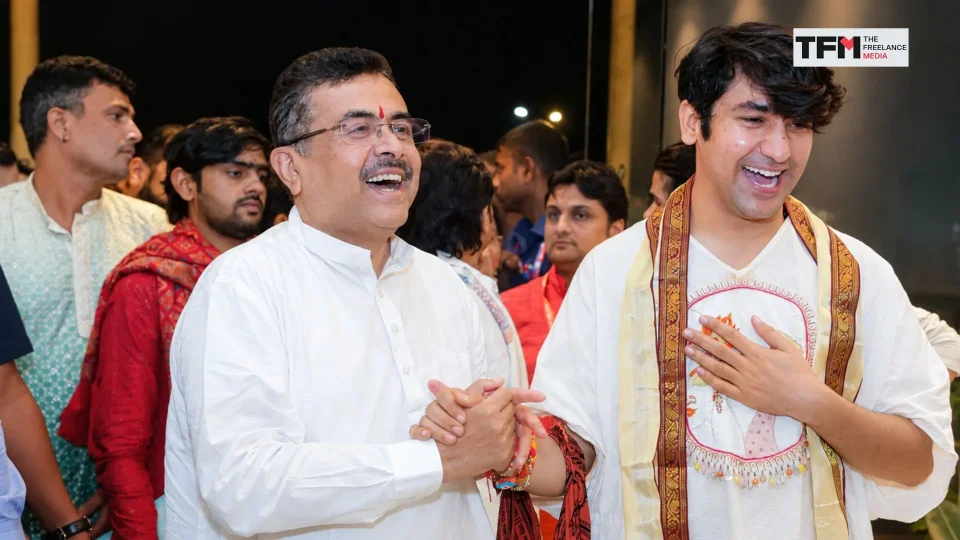
The controversy became politically significant because Chief Minister Suvendu Adhikari had attended Shastri’s programme and met the preacher during his visit to the state.
Dhirendra Krishna Shastri (Bageshwar Dham) addresses Bengali Hindus:
— Sanghamitra Bandyopadhyay (@SanghamitraLIVE) September 6, 2026
"Nonveg should not be sold near Durga idols during Durga Puja. Bengali Hindus should observe Navratri. Even if you don't install Durga idol, ensure the rituals are performed with utmost devotion and sincerity." pic.twitter.com/rafJcFEu1y
Why has the meat appeal caused a row in Bengal?
Durga Puja in West Bengal is both a religious festival and a major expression of Bengali cultural identity. There is no single food tradition followed by every Bengali Hindu family during the festival.
Vegetarian food is central to some rituals and households, while non-vegetarian food also forms part of longstanding practices in others. In particular, the Shakta tradition associated with the worship of the Goddess has historically included animal sacrifice at some temples and traditional household Pujas. In some Bonedi Bari Pujas, goat sacrifice on Nabami was followed by the preparation of the meat as prasad.
Fish and mutton are also commonly eaten by many Bengali families during the festive period. Against this backdrop, Shastri’s comments prompted criticism from people who viewed the appeal as an attempt to impose a different interpretation of Hindu practice on Bengal’s traditions.
What did the Bengal BJP president say?
West Bengal BJP president Samik Bhattacharya publicly distanced the party from any suggestion that people should be told what they can eat.
Bhattacharya said Bengalis would continue eating what they traditionally eat and argued that nobody could prescribe an individual’s food or clothing choices.
He specifically referred to Bengal’s tradition of eating fish and meat and invoked Swami Vivekananda while rejecting attempts to impose outside dietary preferences on the State.
Bhattacharya also said a religious figure had the right to make an appeal for vegetarianism, but such views could not be imposed on people.
His intervention created an important distinction between respecting Shastri’s right to express a religious opinion and accepting that opinion as a prescription for Bengal’s Durga Puja celebrations.
Why did Suvendu Adhikari’s position attract attention?
The controversy emerged just as the BJP government was setting out its approach to its first Durga Puja season in power in West Bengal.
Adhikari had met Shastri during the preacher’s visit to the State, and their interaction was highlighted by opposition parties after the food controversy erupted.
The Chief Minister has separately called on Durga Puja organisers to protect Sanatani traditions and avoid themes that could hurt religious sentiments.
His government has also announced several changes for this year’s celebrations.
Liquor shops and bars will remain closed on Maha Ashtami, while DJs have been prohibited at Puja venues and during immersion processions.
The government has also said Puja committees will receive full waivers on electricity charges and fire safety clearance fees.
At the same time, the traditional post-Dasami Durga Puja carnival associated with the previous government will not take place this year.
How does the VHP figure in the controversy?
Shastri’s remarks did not emerge in isolation. Days earlier, the Vishwa Hindu Parishad had issued an advisory concerning food around Durga Puja pandals in West Bengal. The organisation called for non-vegetarian food to be kept away from the immediate pandal and deity area, saying this was necessary to maintain the sanctity of the festival.
The VHP, however, did not call for a complete ban on fish and meat throughout Durga Puja. Reports said it indicated that non-vegetarian food stalls could operate in designated areas away from the pandals.
Shastri’s subsequent remarks broadened the debate and prompted stronger reactions over Bengali food habits.
Has the controversy led to police complaints?
Yes. Congress leaders in West Bengal have lodged complaints with police against Shastri over his remarks. One complaint was filed at Bhabanipur police station and another at Muchipara police station in Kolkata. The complainants alleged that Shastri’s comments had hurt Bengali sentiments and sought police action.
The filing of a complaint does not establish that an offence was committed. Any criminal liability would have to be determined through the legal process.
The controversy has also drawn political criticism from opposition parties, which have sought to portray the row as a conflict between Bengal’s regional cultural practices and religious prescriptions originating outside the State.
Why is the controversy politically significant?
The dispute poses a delicate cultural question for the BJP government. On one side is an emphasis on Sanatani religious practices and the views of Hindu religious organisations and preachers. On the other is Bengal’s distinctive version of Hindu religious and cultural practice, in which fish and meat are not necessarily regarded as incompatible with worship.
The State BJP president’s response reflects that tension. While not denying Shastri’s right to advocate vegetarianism, Bhattacharya strongly defended the right of Bengalis to maintain their established food traditions.
The issue is therefore no longer merely about what is served during Durga Puja.
It has developed into a broader debate over who defines Bengali Hindu traditions, how religious prescriptions interact with regional practices and where the State government positions itself between the two. With Durga Puja approaching, those questions are likely to remain part of Bengal’s political conversation.