Courtesy: X/NITIAayog
India is producing more graduates than ever, yet a large share of them end up in jobs that have little connection to what they studied. A NITI Aayog paper released this month underlines the scale of the problem and calls for a fundamental rethink of how the country approaches education and skilling.
The paper, titled Reimagining Skilling for Viksit Bharat@2047, cites data showing that only 8.25% of graduates are employed in roles aligned with their qualifications. The figure, drawn from the Economic Survey 2024-25, points to widespread underemployment rather than simple joblessness.
Of the 3.4 crore students enrolled in undergraduate programmes, 1.13 crore are pursuing a Bachelor of Arts degree alone. Combined enrolment in BA, BSc and BCom courses exceeds two crore. NITI Aayog notes that these generic degrees often have “weak job linkages” and are frequently chosen because they keep students eligible for government recruitment exams.
Why do so many degrees fail to lead to matching jobs?
The paper identifies a “fundamental disconnect” between classroom teaching and labour-market demand. Curricula in many institutions remain outdated and insufficiently linked to industry needs. Even entry-level private-sector roles often require practical skills such as accounting software or digital tools that standard degree programmes do not systematically teach.
Students themselves report major gaps. According to the paper, 80% of learners cite lack of practical experience and industry exposure as a serious shortcoming of their degrees. Another 34% point to lack of skills and 18% to inadequate interview preparation.
Finance Minister Nirmala Sitharaman, speaking in an interview published on 17 August, made a similar observation. “Courses which all of us go and join and come out of don’t ready you for jobs,” she said. “They often do not prepare students to become entrepreneurs either.”
Why does the government job remain the default dream?
The mismatch helps explain the intense competition for public-sector posts. Between November 2024 and July 2025, 1.86 crore applications were received for just 55,000 government vacancies. The education system continues to generate aspirations for secure government employment even though such jobs form only a small fraction of total employment.
Sitharaman argued that the solution cannot be simply expanding government hiring. The system, she said, must prepare young people for multiple pathways, including private employment, entrepreneurship, self-employment and family businesses.
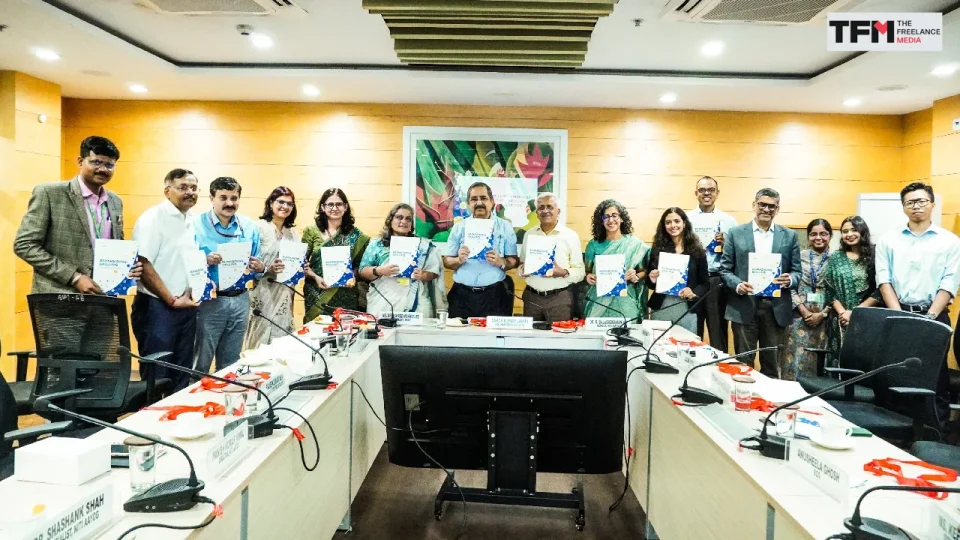
NITI Aayog has released the report “Reimagining Skilling for Viksit Bharat@2047”, presenting an in-depth, evidence-based mapping of India’s skilling ecosystem and outlining a blueprint for a Reimagined Skilling Architecture.
— NITI Aayog (@NITIAayog) August 18, 2026
The report identifies key challenges and calls for… pic.twitter.com/8YBgBXhROl
What solutions does NITI Aayog propose?
The report recommends embedding employability and entrepreneurship skills from Class 6 onwards and introducing structured vocational tracks from Class 9. It calls for stronger industry partnerships, apprenticeship-embedded degree and diploma programmes, outcome-linked financing, a Digital Skills Passport, and a shift towards skills-first hiring in which a formal degree is no longer the sole entry ticket.
Internships and apprenticeships are described as the “missing bridge” between college and the workplace, provided they offer genuine learning rather than token observation.
India’s challenge is no longer just expanding access to higher education. It is ensuring that the years spent in classrooms translate into workplace capability. Until that bridge is built more systematically, large numbers of graduates will continue to emerge with certificates but without a clear professional destination.