Courtesy: X/narendramodi
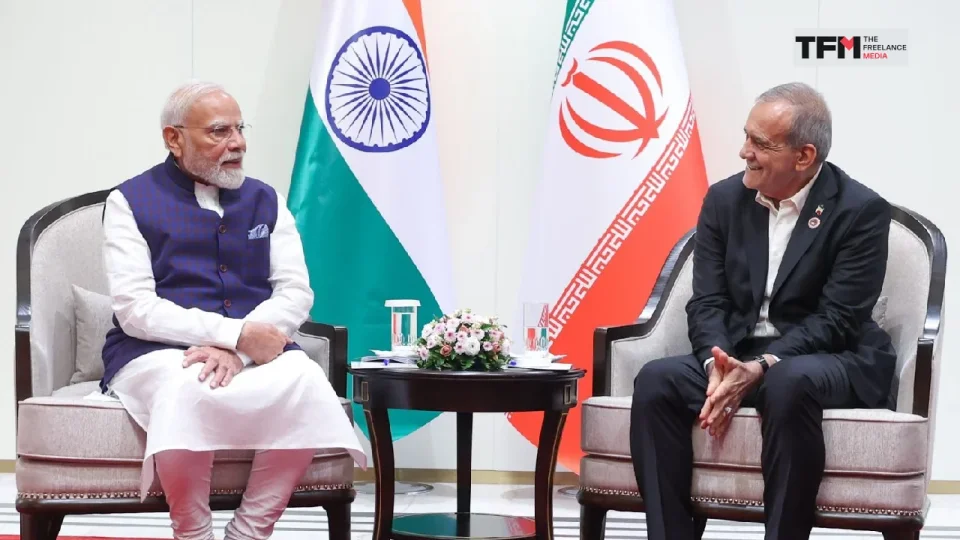
Modi-Pezeshkian Meet News: Prime Minister Narendra Modi and Iranian President Masoud Pezeshkian discussed expanding and diversifying India-Iran trade as the two leaders met on the sidelines of the Shanghai Cooperation Organisation summit in Bishkek, Kyrgyzstan, on Monday, August 31.
The meeting took place against a tense regional backdrop, with the conflict in West Asia continuing to affect security, commerce and shipping. Modi reiterated India's position that disputes should be resolved through dialogue and diplomacy and stressed the need to protect freedom of navigation and commercial shipping.
What did Modi and Pezeshkian discuss?
The two leaders reviewed India-Iran bilateral relations and discussed ways to strengthen cooperation across different sectors.
Modi said India wanted to "expand and diversify" its trade basket with Iran in the coming period, signalling New Delhi's interest in widening economic engagement with Tehran.
The Prime Minister also reiterated India's commitment to its long-standing relationship with Iran and discussed the prevailing regional situation with Pezeshkian.
According to the Ministry of External Affairs, both leaders exchanged views on developments in West Asia.
The talks are significant for India because instability in the region can directly affect energy supplies, shipping, trade routes and the safety of Indian nationals and seafarers.
India stresses dialogue and diplomacy amid West Asia conflict
Modi expressed concern over escalating tensions in West Asia and reiterated India's position that disputes should be settled through dialogue and diplomacy.
The Prime Minister also called for continued efforts to secure lasting peace and stability.
India has sought to maintain diplomatic engagement with different sides during the conflict while repeatedly advocating a negotiated solution.
Modi told Pezeshkian that India would continue supporting efforts aimed at achieving lasting peace.
Iran, meanwhile, has maintained that it favours a diplomatic solution to the conflict while blaming the United States for the continuing confrontation.
Why did Modi raise freedom of navigation?
Maritime security featured prominently in India's message during the talks.
Modi stressed the importance of safeguarding freedom of navigation and commerce and said civilians and civilian infrastructure, including commercial vessels and seafarers, should not be harmed.
The issue carries particular importance for India because disruption to shipping routes in and around the Gulf can have consequences for energy imports, freight costs and wider international commerce.
The Strait of Hormuz is especially important to global energy flows and India's energy security.
Regional hostilities have heightened concerns about commercial vessels and crews operating in the area, making maritime security a key part of India's diplomatic engagement with Iran.
Trade push comes amid pressure on Iran
The India-Iran discussion also comes as Tehran faces substantial international economic pressure.
The United States has been seeking to increase financial pressure on Iran and discourage economic engagement with Tehran.
India Today's report noted that the Modi-Pezeshkian meeting came days after the Donald Trump administration warned about penalties linked to economic dealings with Iran.
That context makes Modi's public call to expand and diversify India-Iran trade particularly noteworthy.
However, the leaders' statement of intent does not by itself amount to a new trade agreement. No specific new trade target, agreement or financial mechanism was announced in the publicly reported readout of Monday's meeting.
Met President Masoud Pezeshkian in Bishkek. Reiterated our commitment to strengthening India’s long standing friendship with Iran across diverse sectors. We want to expand and diversify our trade basket in the times to come.
— Narendra Modi (@narendramodi) August 31, 2026
We had a discussion on the prevailing situation in… pic.twitter.com/qagQy5o108
What did Iran's President tell Modi?
According to an Iranian account of the meeting cited in PTI-based reporting, Pezeshkian thanked India for its support and cooperation with Iran during the recent conflict.
The Iranian President emphasised diplomatic efforts to establish peace and security and referred to India's position and relationships across the region.
Pezeshkian urged Modi to use India's contacts with different parties to encourage a shift away from conflict and towards negotiations.
Iran's account said Pezeshkian maintained that dialogue and cooperation offered a route towards resolving the region's problems and preventing further instability.
India and Iran look to deepen multilateral cooperation
Beyond bilateral trade and the regional conflict, Modi and Pezeshkian also discussed cooperation through international groupings.
India conveyed its willingness to work closely with Iran in organisations including BRICS and the Shanghai Cooperation Organisation.
Modi also said he looked forward to welcoming Pezeshkian to India for the BRICS Summit, according to the MEA account cited in PTI-based reporting.
Iran became a full member of the SCO in 2023 and joined BRICS as a full member in 2024, creating additional platforms for engagement between New Delhi and Tehran.
Modi also meets Armenian Prime Minister
Modi separately met Armenian Prime Minister Nikol Pashinyan on the sidelines of the SCO summit.
The Prime Minister said India and Armenia were looking to expand cooperation in defence, information technology, space, education and pharmaceuticals.
He also expressed confidence that bilateral trade and investment ties would deepen.
The separate meetings reflected India's broader diplomatic engagement at the SCO gathering as regional conflicts, economic ties and strategic cooperation dominated discussions among participating countries.
What happens next for India-Iran relations?
The Modi-Pezeshkian meeting produced a clear political signal in favour of strengthening India-Iran relations, particularly through a broader trade relationship.
At the same time, the regional security environment and international sanctions create significant complications for economic engagement with Tehran.
No major new bilateral trade agreement was announced following Monday's talks.
For now, India has coupled its push for wider ties with Iran with calls for de-escalation, diplomatic negotiations and protection of international commerce, positioning economic cooperation and regional stability as interconnected priorities.